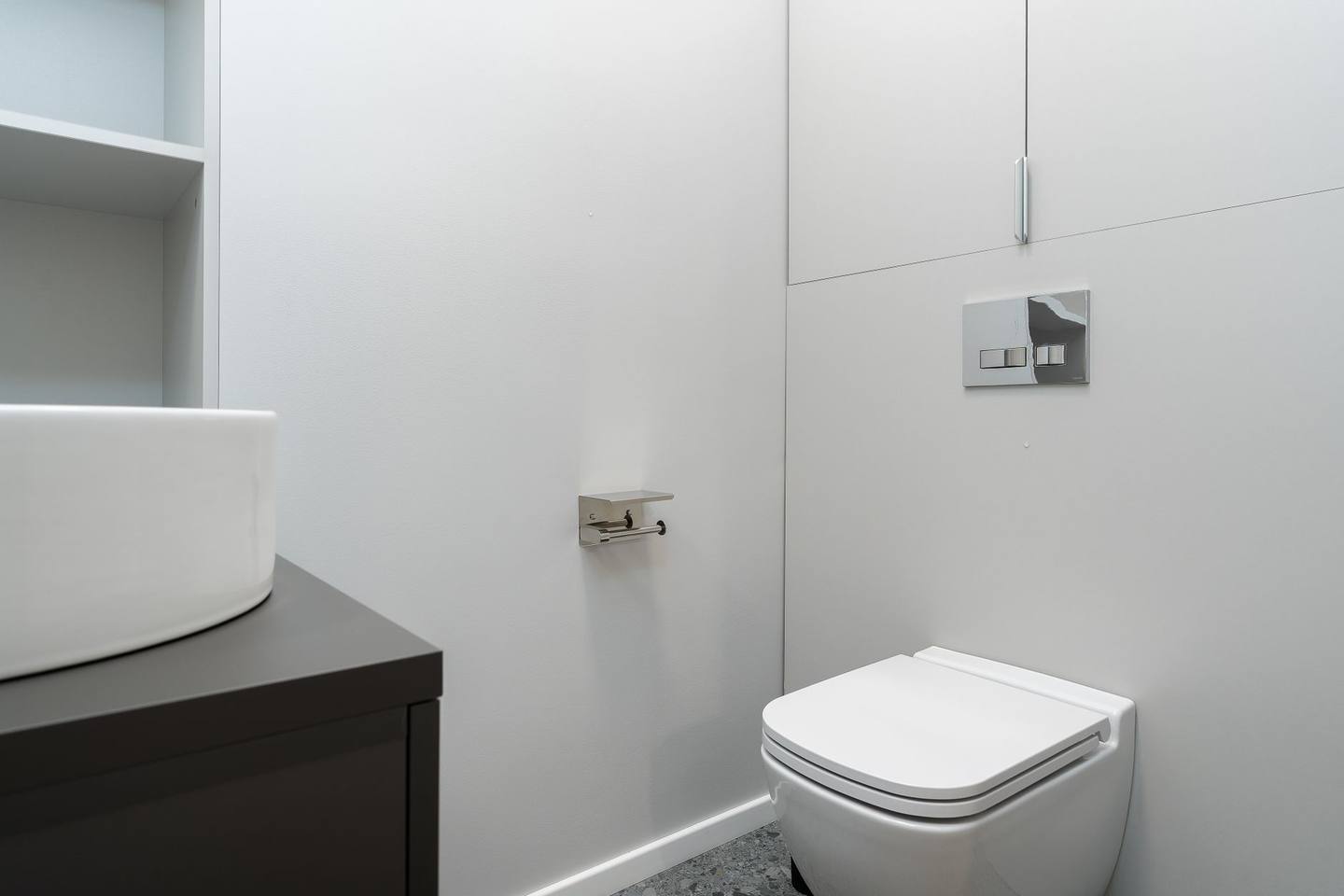
Toilet renovation in Melbourne: swap, refresh or rebuild?
Quick answer: A toilet renovation in Melbourne is three different jobs: swap the suite, refresh the room or rebuild it. Swapping the suite is plumbing work and needs a licensed plumber. Refreshing is mostly surfaces, a light and a fan that vents outside. Rebuilding is where the cost jumps, because moving the toilet means moving the waste pipe. A powder room is priced after a site visit, and it is not proportionally cheaper than a bathroom, because the fixed costs do not shrink with the room.
Swap, refresh or rebuild: pick the smallest job that solves the problem
People ask for a toilet renovation and mean three different things. The price of each is very different, so decide which one you need before you ask anyone for a number.
Swap the suite
A new toilet in the same position, on the same waste pipe. It is plumbing work, so it needs a licensed plumber, and it is the smallest job. It fixes a cracked pan, a failing cistern or a suite that wastes water. It does not fix tired tiles, a dark room or a layout that does not work.
Refresh the room
The suite plus the surfaces around it: floor, walls, a new basin or vanity, lighting and a fan that vents outside. The toilet stays where it is. This is the right job for most powder rooms, because the pipes are fine and the room just looks old.
Rebuild the room
Strip it back, move the toilet or change the room, and rebuild. Moving the toilet means moving the waste pipe, and on a slab floor that means cutting the slab. This is the job where the price jumps, and it is only worth it when the position is the problem.
The honest order is swap, then refresh, then rebuild. Stop at the first one that fixes the problem you actually have.
What decides the price of a very small room
A toilet room is small, and that tempts people to expect a small price. The fixed costs of a wet room do not shrink with the floor area: getting trades on site, setting up and cutting tiles, and running plumbing and power. Six things decide where yours lands.
Where the waste pipe is, and what the floor is made of
A toilet on a timber floor can usually be moved with less disruption than one on a concrete slab. On a slab, the pipe is cast in the concrete, and moving it means cutting and patching the slab. Ask which floor you have before you ask for a price.
The type of suite
A standard floor-mounted suite is the simplest. A back-to-wall suite with a concealed cistern, or a wall-hung suite on an in-wall frame, needs the wall built out or rebuilt around it, and an access panel for the flush parts.
Floor, walls and what is under them
Old tiles come up with adhesive and sometimes damaged backing. Tiling a small room is mostly set-up and cutting, so a small area does not cost proportionally less than a bathroom.
Ventilation
A toilet needs an openable window or a fan that vents outside. A fan that ends in the roof space leaves damp air where nobody can see it. Running a duct to the outside adds work, and it is the line most often missing from a quote.
Light and power
A new light, a fan and sometimes a power point for a heated seat or a sensor. Electrical work has to be done by a licensed electrician, and it adds a second trade to a very small room.
Age and surprises
Older homes hide old pipes, patched floors and walls that are not square. Ask how the builder prices for what is found once the old suite is out, before you sign, not after.
What the law expects: a licensed plumber, a certificate and WaterMark
In Victoria, a plumbing product has to be installed by a licensed or registered plumber once it has been bought. That includes a toilet suite. For work worth $750 or more, including the cost of the product, the plumber must issue a certificate of compliance, lodge it with the regulator and give you a copy. The threshold is set by the regulator, so check the current figure with the Building and Plumbing Commission (BPC).
Two labels matter on the box. WaterMark shows a plumbing product is approved for use in Victoria, and a plumber cannot install a product that needs it and does not have it. WELS is the water efficiency star rating, and a product needs valid WaterMark certification before it can carry one. Ask for the make, the model and both labels in writing.
Keep the certificate with the house papers. It is the record that the work was done by someone allowed to do it, and the next buyer, the next plumber and your insurer may all ask for it.
Wall-hung or floor-mounted: the choice that changes the wall
The suite you pick decides how much of the wall is rebuilt. The three common types trade ease against looks.
Floor-mounted with a close-coupled cistern
The standard toilet. Easiest to install and to replace, and every plumber stocks parts for it. The cistern sits on the pan, which takes more depth in a small room.
Back-to-wall with a concealed cistern
The pan sits against the wall and the cistern is hidden in the wall behind it. It looks cleaner and gains depth, but the wall has to be built out or opened, and the flush parts need an access panel that stays reachable.
Wall-hung on an in-wall frame
The pan floats off the wall, which makes the floor easy to clean and the room look larger. It needs a steel frame fixed to the structure, a wall built around it and a buttons panel. It is the most involved of the three, and the wall has to be right before anything else is.
Powder rooms and tight spaces: the layout traps
The smaller the room, the less room there is for a mistake. These are the ones that turn up after the drawings are finished.
- Door swing. A door that opens into a tiny room can hit the pan or the basin. A door that opens outward, or a sliding door, often solves it.
- Clear space in front of the pan. A basin or a vanity that looks neat on a plan can leave no room for knees.
- Storage. A slim cabinet above the cistern or a recessed shelf costs less than a bigger room.
- Under-stair powder rooms. A sloping ceiling limits where the basin and the light can go. Check the head height before the design is drawn.
- Access to the stopcock and the cistern. Tile over either and the next plumber has to cut the wall open.
Questions to ask before you sign
A fixed price only works if it is fixed both ways. These six questions get the important lines into writing.
Who is the plumber, and will I get the certificate?
Plumbing work has to be done by a licensed plumber, who issues a certificate of compliance once the work passes a set dollar value. Ask for your copy.
What suite is in the price, and is it WaterMark certified?
A plumbing product that needs WaterMark certification and does not have it cannot be installed in Victoria. Ask for the make, the model and the WELS water rating in writing.
What happens if the waste pipe is not where the plans assume?
This is the commonest surprise on an older house. A written fixed price should say how a different pipe position is priced.
Where does the fan vent?
Outside, not into the roof space. Ask where the duct ends and who makes good the roof or wall.
What is the floor, and what is under the new tiles?
Ask what is done to the floor before tiling, and put the answer in writing, so a leak under a tiled floor is not a dispute later.
What are the start and end dates?
A powder room can be the only toilet in the house. Ask for the days it will be out of use, and plan around them.
If the toilet is in your bathroom, price it with the bathroom
A toilet inside a bathroom or an ensuite is part of that room, and it is cheaper to renew it while the room is open than to come back later. A full bathroom, toilet included, runs $18,000 to $40,000 as a written fixed price. Our bathroom renovation cost guide explains what drives that range, and ensuite renovation cost covers the smaller room.
A separate powder room is different. It is a small room with a short list of jobs, and the right question is which of the three jobs above you need.
Worth knowing
If the toilet is cracked, leaking or running constantly, you do not need a renovator. Call a licensed plumber. A new suite in the same position is a plumber's job, and we will tell you so at the site visit.
If the room only looks old, refresh it and leave the pipes alone. A rebuild that moves the toilet is worth its price only when the position itself is the problem. If you are well outside 30 km of the Melbourne CBD, a builder closer to you will be easier to reach, and we do not price from photos: every quote follows a site visit.
Common questions
Do I need a plumber to replace a toilet in Victoria?
Yes. A plumbing product has to be installed by a licensed or registered plumber once it is bought. For work worth $750 or more, including the cost of the product, the plumber must issue a certificate of compliance, lodge it with the regulator and give you a copy. Check the current threshold with the Building and Plumbing Commission.
How much does a toilet renovation cost in Melbourne?
It depends on which of three jobs you need: swapping the suite, refreshing the room or rebuilding it, and each is priced after a site visit. A small room is not proportionally cheaper than a bathroom, because the plumbing, tiling set-up and electrical work do not shrink with it. A full bathroom, with its toilet, runs $18,000 to $40,000 as a gutted. fixed price.
Can I move my toilet to a different position?
Usually yes, but it is the expensive job. The waste pipe has to move with it, and on a concrete slab that means cutting and patching the slab. Ask whether the position is really the problem, because a better suite or a better layout in the same position is far cheaper.
Is a wall-hung toilet worth it?
It makes the floor easier to clean and the room look larger, and it suits a small powder room. It needs an in-wall frame, a wall built around it and an access plan for the flush parts, so it is the most involved suite to fit. If the wall is already open for another reason, it costs much less to add.
Does a toilet room need a fan?
It needs ventilation: an openable window or a fan that vents outside. A fan that vents into the roof space leaves moisture where you cannot see it. A new fan is a good time to fix this, and a good builder will ask where the duct ends.
Does the floor of a toilet room need waterproofing?
Not every toilet room is treated like a shower, but a leak under a tiled floor still does damage. Ask your builder to confirm what the building code requires for your room and to put the answer in the quote.
What are WaterMark and WELS on a toilet?
WaterMark is the certification that a plumbing product is approved for use in Victoria. WELS is the star rating for water efficiency. A toilet needs valid WaterMark certification before it can carry a WELS rating, so ask for both.
How long does a toilet renovation take?
Swapping a suite is short, refreshing the room takes longer and rebuilding it takes longest, because each adds trades and drying or curing time. We put a written start date and a written end date in the quote, so you know the days the toilet is out of use.
Planning more than the toilet? Read bathroom vanity replacement cost, small bathroom renovation ideas and what should be in a renovation quote. General guidance on contracts is on Consumer Affairs Victoria.